
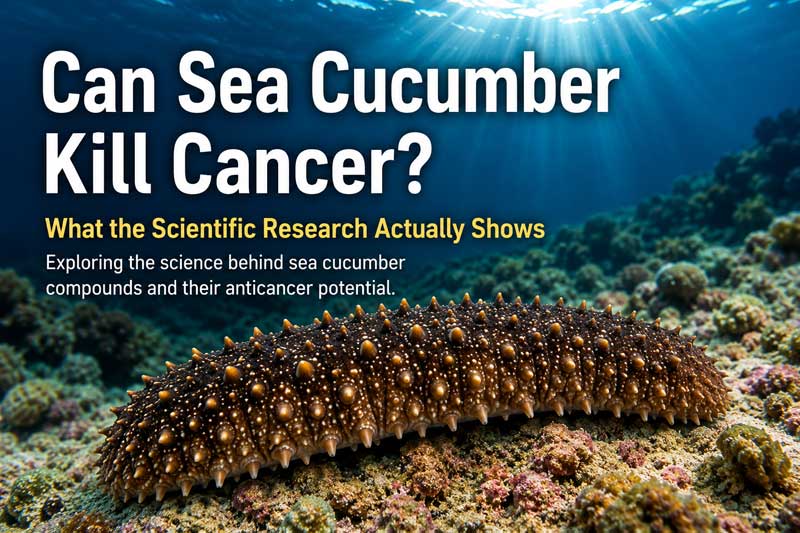
What the Scientific Research Actually Shows
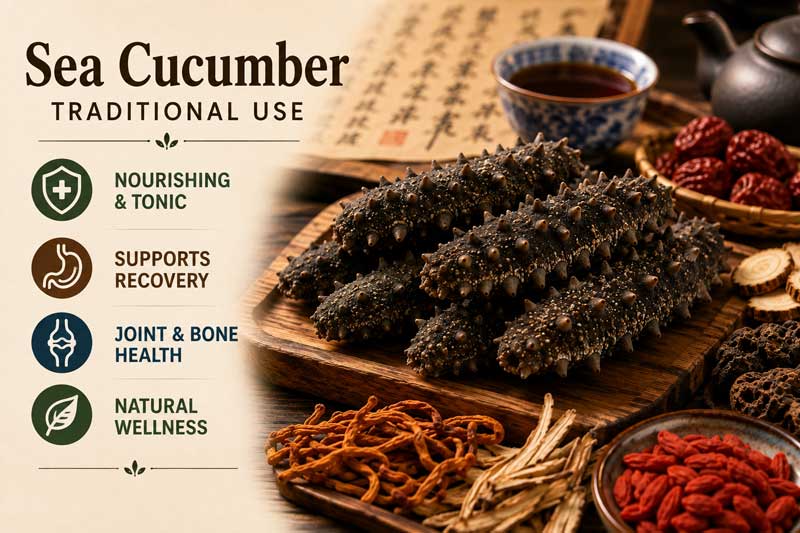
Sea cucumber has been eaten as a food and used in traditional Asian medicine for centuries. More recently, scientists have become interested in compounds found in sea cucumbers because laboratory studies suggest that some of them can damage cancer cells, slow their growth and interfere with processes involved in tumour development.
So, can sea cucumber actually kill cancer?
The answer is promising—but it needs an important qualification: sea cucumber compounds have killed or inhibited cancer cells in laboratory experiments and have reduced tumour growth in some animal studies, but sea cucumber itself has not been proven to cure cancer in humans.
What Is Special About Sea Cucumber?
Sea cucumbers belong to the class Holothuroidea and are relatives of starfish and sea urchins.
Researchers have identified hundreds of biologically active substances in different species of sea cucumber. Of particular interest are compounds called triterpene glycosides, sometimes referred to as saponins.
More than 300 different triterpene glycosides have been isolated and characterised from sea cucumbers. Cytotoxic activity—the ability to damage or kill cells—is one of their most commonly reported biological properties.
Some of the best-known compounds investigated for possible anticancer activity include:
- Frondoside A
- Holothurin A
- Echinoside A
- Cucumariosides
- Philinopsides
- Stichoposides
These are not simply nutrients such as vitamins or minerals. They are biologically active molecules that can interact with cellular membranes and signalling pathways.
Can Sea Cucumber Compounds Kill Cancer Cells?
Yes—in laboratory experiments.
Numerous sea cucumber compounds have demonstrated cytotoxic activity against cultured cancer cells.
Research reviewed in Marine Drugs found activity involving cancer cell lines associated with breast, lung, colon, prostate, liver, ovarian and other cancers.
For example, compounds called holothurin A3 and A4, isolated from Holothuria scabra, showed cytotoxic effects against human hepatocellular carcinoma and epidermoid carcinoma cell lines.
Another sea cucumber compound, philinopside E, demonstrated potent cytotoxic activity against several tumour cell lines in laboratory testing.
However, killing cancer cells in a laboratory dish is very different from successfully treating cancer in a person.
Frondoside A: One of the Most Interesting Compounds
One sea cucumber compound has received particularly strong scientific interest: Frondoside A.
Frondoside A is a triterpenoid glycoside originally isolated from the sea cucumber Cucumaria frondosa.
Laboratory research has found that Frondoside A can inhibit proliferation of several cancer cell lines.
In experimental lung cancer research, Frondoside A increased activity of enzymes associated with apoptosis—the programmed self-destruction of damaged or abnormal cells.
Even more interestingly, researchers studying mice implanted with human lung cancer cells reported substantially reduced tumour volumes following treatment with Frondoside A. The compound also showed evidence of inhibiting tumour blood-vessel formation and metastasis in experimental models.
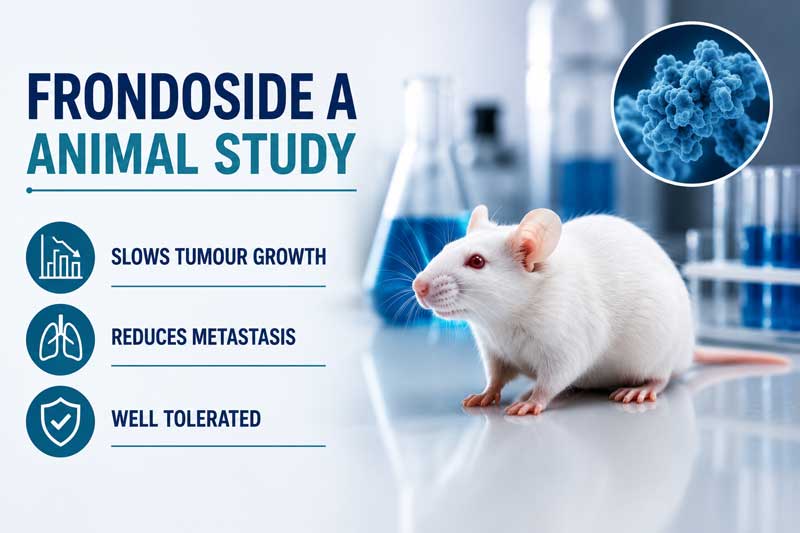
Researchers have additionally reported enhanced antitumour activity when Frondoside A was combined with the chemotherapy drug cisplatin in an animal tumour model.
This is intriguing research, but these experiments do not demonstrate that taking a sea cucumber supplement will produce the same effect in humans.
How Could Sea Cucumber Compounds Affect Cancer?
Cancer isn’t a single biological process. Cancer cells survive by manipulating numerous cellular mechanisms, which is one reason researchers find sea cucumber compounds interesting.
Experimental studies suggest several possible mechanisms.
1. Triggering Cancer Cell Death
Some triterpene glycosides appear capable of activating apoptosis.
Apoptosis is essentially a cellular self-destruct programme. Cancer cells frequently develop mechanisms allowing them to avoid apoptosis.
Sea cucumber compounds have been reported to influence caspase pathways involved in programmed cell death.
2. Slowing Cancer Cell Division
Cancer depends upon uncontrolled cell division.
Research indicates that certain sea cucumber glycosides can interfere with the cancer cell cycle, including arresting cells during the S or G2/M phases.
Stopping cells at these checkpoints can prevent them from continuing to multiply.
3. Interfering With Cancer Cell Membranes
Sea cucumber triterpene glycosides can interact with sterols such as cholesterol within cellular membranes.
This interaction can alter membrane permeability and ion balance and, at sufficient concentrations, cause cell damage or death.
This activity is scientifically interesting but also illustrates why a substance that kills cancer cells isn’t automatically a safe cancer medicine: cytotoxic compounds may potentially damage normal cells as well.
4. Reducing Angiogenesis
Tumours need a blood supply to continue growing.
The formation of new blood vessels is called angiogenesis.
Some sea cucumber compounds have inhibited angiogenesis in experimental systems, potentially making it more difficult for tumours to establish the blood supply necessary for continued growth.
5. Potentially Reducing Metastasis
Metastasis occurs when cancer cells invade surrounding tissue and spread elsewhere in the body.
Experimental research indicates that certain sea cucumber glycosides can influence cancer-cell adhesion, migration and invasion—processes important in metastasis.
Researchers have also observed reduced metastasis with Frondoside A in experimental models.
What Types of Cancer Have Been Studied?
Sea cucumber compounds or extracts have been investigated experimentally against numerous cancer cell types, including:
Breast cancer • Lung cancer • Colon cancer • Prostate cancer • Liver cancer • Ovarian cancer • Gastric cancer • Leukaemia • Melanoma
This does not mean sea cucumber is an established treatment for these cancers. Most of this evidence comes from isolated cancer cells or experimental animal models rather than clinical treatment of people.
The Big Missing Piece: Human Clinical Trials
This is the most important part of the story.
There is a huge difference between:
A compound killing cancer cells in a laboratory
and
a treatment safely eliminating cancer in humans.
Many substances can kill cultured cancer cells. Only a small proportion eventually become effective cancer medicines.
Before an experimental compound can be considered a cancer treatment, researchers need to establish appropriate dosing, absorption, metabolism, toxicity, interactions with other medicines and—most importantly—whether patients receiving it actually experience better outcomes.
The research reviewed here is dominated by cell-culture and animal experiments, not large controlled human cancer trials.
Therefore it would currently be scientifically inaccurate to say:
“Sea cucumber cures cancer.”
A much more accurate statement is:
Certain compounds isolated from sea cucumbers have demonstrated significant anticancer activity in laboratory and animal research, but this has not yet established sea cucumber as an effective cancer treatment in humans.
Sea Cucumber Extract Is Not Necessarily Frondoside A
Another important distinction is often overlooked.
A study involving purified Frondoside A does not automatically demonstrate that ordinary dried sea cucumber, sea cucumber powder or a commercial sea cucumber capsule will produce the same biological effect.
Different sea cucumber species contain different compounds and concentrations, while processing and extraction methods can dramatically affect the final composition.
Consequently, research on a purified compound cannot simply be translated into an equivalent dose of an ordinary dietary supplement.
Could Sea Cucumber Become Part of Future Cancer Treatments?
Possibly.
Sea cucumbers are interesting to cancer researchers precisely because their compounds appear to attack several processes associated with tumour survival simultaneously.
Research has reported effects involving:
apoptosis → cell-cycle arrest → reduced proliferation → reduced angiogenesis → reduced migration/invasion → possible interference with multidrug resistance.
That makes sea cucumber-derived compounds potential candidates for further drug development.
But the next steps require considerably more research, particularly controlled human studies.
The Bottom Line
Can sea cucumber kill cancer?
In laboratory experiments, yes—certain compounds isolated from sea cucumbers can kill or inhibit cancer cells.
Animal studies have gone further, with some compounds reducing tumour growth and metastasis.
But there is currently a critical distinction:
Promising anticancer research does not equal a proven cancer cure.
The most scientifically defensible conclusion is that sea cucumber contains potentially important anticancer compounds worthy of further investigation, particularly triterpene glycosides such as Frondoside A.
Sea cucumber or sea cucumber supplements should therefore not be promoted as replacements for established cancer treatments. Anyone undergoing cancer treatment should discuss supplements with their oncology team because biologically active extracts can potentially interact with medicines or affect processes such as blood clotting. Sea cucumbers contain compounds with reported anticoagulant and antithrombotic activity as well as anticancer activity.
If you are looking to buy Sea Cucumber capsules they are available at Everyday Health.
References
Aminin DL, Menchinskaya ES, Pisliagin EA, et al. Anticancer Activity of Sea Cucumber Triterpene Glycosides. Marine Drugs. 2015;13(3):1202–1223.
Janakiram NB, Mohammed A, Rao CV. Sea Cucumbers Metabolites as Potent Anti-Cancer Agents. Marine Drugs. 2015.
Khotimchenko Y. Pharmacological Potential of Sea Cucumbers. International Journal of Molecular Sciences. 2018.
Aminin DL et al. Research reviewing the molecular mechanisms and experimental antitumour activity of sea-cucumber triterpene glycosides, including apoptosis, cell-cycle arrest, angiogenesis and metastasis.
Sea Cucumber Glycosides: Chemical Structures, Producing Species and Important Biological Properties. Review describing more than 300 characterised sea-cucumber triterpene glycosides and their biological activities.
This article is for educational purposes and discusses experimental scientific research. It is not medical advice and does not claim that sea cucumber prevents, treats or cures cancer.